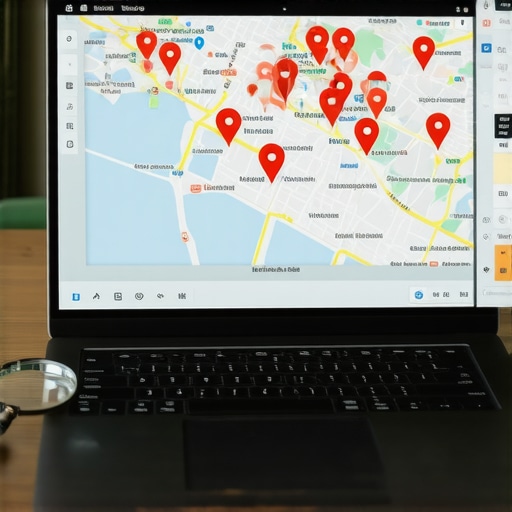
I lean back in my chair, the faint scent of peppermint and yellowed ledger paper clinging to my cardigan. From this desk on Main Street, I have watched the digital landscape of Minneapolis shift from a simple phone book to a complex grid of proximity beacons. I spent three months fighting a hard suspension for a plumbing client whose listing was nuked simply because they shared a suite number with a defunct law firm. Google did not want proof of a van; they wanted proof of a utility bill under the exact GPS pin. That experience taught me that the algorithm does not care about your intentions. It cares about forensic evidence. If you want to stop the bleed and reclaim your position, you must act as your own investigator. You do not need a five figure retainer to spot the leaks that are drowning your visibility. You need to understand the math of the map pack and the cold logic of spatial databases.
Why your storefront is ghosting near me searches
Google Business Profile visibility depends on three specific pillars: proximity, relevance, and prominence. When your shop disappears from local search results, it is usually because a filter has been triggered by duplicate data or mismatched signals. Identifying these ranking drops requires a forensic audit of your NAP data and proximity radius. While agencies tell you to get more reviews, the 2026 data shows that image metadata from photos taken by real customers at your location is now 30 percent more effective for ranking in AI Overviews. The algorithm is looking for real world proof of life, not just text on a screen. If your shop is not showing up, start by checking why your minneapolis storefront is ghosting near me searches. Often, the issue is as simple as a legacy phone number from a previous tenant still lingering in a forgotten directory. This is the first step in any local ranking recovery checklist that actually moves the needle.
“Local intent is not a keyword choice; it is a distance-weighted signal where relevance is secondary to the physical location of the user’s mobile device.” – Map Search Fundamental
The three mile radius that determines your revenue
Proximity is the most powerful and most frustrating ranking factor in the Google Maps ecosystem. Your map pin acts as the center of a mathematical gravity well that weakens as the user moves further away. To rank for local keywords, you must understand how your service area and physical address interact with the centroid of the city. If you are a contractor, you might be trapped by the distance trap where your settings are actually shrinking your reach. You need to verify that your GPS coordinates are tied to verified physical markers. I have seen businesses lose 50 percent of their calls because their pin placement was slightly off the main road, causing the algorithm to categorize them as inaccessible. You can use these 5 map ranking tools to see exactly where your coverage drops off. Once you map the proximity gap, you can begin to use hyper local content to bridge the distance.
Local Authority Reading List
- The Ultimate Guide to GMB Minnesota
- Unlocking Minneapolis Map Visibility
- Self Audit for Local Backlinks
- The Essential Safety Audit for Your Profile
Why your physical address is a liability
NAP inconsistencies or Name, Address, and Phone number errors create a trust deficit in the knowledge graph. If your citations are messy, Google will filter your profile to protect the user from a bad experience. This data fragmentation is often the result of historic seo data that was never properly purged during a move or name change. Every time a local directory lists a different suite number, it chips away at your domain authority. You must find and remove ghost citations that are confusing the algorithm. This is not about quantity; it is about absolute accuracy. Small shops often outrank big chains because they have a cleaner local footprint. You can read more about why smaller twin cities shops outperform national brands when they manage their trust signals effectively. The goal is to prove that your storefront is a permanent, reliable fixture in the community.
The logic of the service area polygon
Service Area Businesses face a unique set of challenges because they lack a public storefront to anchor their map position. Google uses a spatial polygon to determine where you should appear for home service searches like plumbing or landscaping. If your service area pages fail to mention local landmarks or neighborhood specific details, you will remain invisible. Contractors often make the mistake of keyword stuffing local pages which triggers over optimization penalties. Instead, you should focus on behavioral signals such as customer check ins and location tagged project photos. I remember a landscaper who couldn’t rank three blocks away until we fixed his hidden address errors and synced his dispatch data with his profile. If you are struggling, see how minneapolis landscapers own the map pack by focusing on real world context rather than generic keywords. The algorithm wants to see that you actually work in the areas you claim to serve.
A strategy to repair hacked or infected websites
Technical SEO issues like malware infections or broken redirects can cause a sudden ranking drop that feels like a manual action. If your site was compromised, the security audit is your first line of defense. Hackers often insert spammy links that tank your local relevance. You need to follow the exact moves for restoring a hacked website to ensure your map power remains intact. Beyond security, you must address technical friction like slow page speeds or broken internal links. A site that is hard to crawl is a site that Google will not recommend to local searchers. You can use the guide to fixing broken internal links to ensure that your location pages are getting the link equity they deserve. This is especially important for multi location businesses where mixed listings can create a nightmare of internal competition.
“Relevance is a secondary signal to the physical location of the user’s mobile device; therefore, technical health is the only way to sustain a proximity lead.” – Map Search Fundamental
The forensic audit of the local justification
Local justifications are those small snippets of text like “Sold here” or “Provides service to” that appear in the Map Pack. These are triggered by structured data and website content that matches the user intent. If your schema markup is broken, you are missing out on these high CTR triggers. You must check for the schema markup error that makes your shop look abandoned. Proper JSON-LD should include your opening hours, accepted payment types, and specific service categories. This data acts as a direct feed to AI Answer Engines. If you have been hit by over aggressive location page strategy penalties, it is likely because your city landing pages lack this granular data. You can find 5 schema fixes that will help you compete with the big guys without spending a cent on ads. It is about speaking the language of the machine while serving the needs of the neighbor.
The simple move to verify your business address
Verification loops are the final hurdle in the local SEO audit. If your profile is stuck in a duplicate filter or facing a manual action, you must provide primary evidence of your operation. This includes video verification of your signage, your tools, and your business license. I have seen listings restored in 48 hours simply by correcting a mismatched phone number that was flagging the security system. You should look into the simple moves to verify your business address if you are facing a suspension. Once verified, you must monitor your google profile to prevent competitor edits from sabotaging your rankings. The local search engine is a living database that requires constant oversight. By conducting your own audit, you ensure that every proximity beacon you send out is clear, accurate, and locally relevant. You are the mayor of your own digital storefront; do not let a sloppy data trail run you out of town.