The reinstatement war that defines modern maps
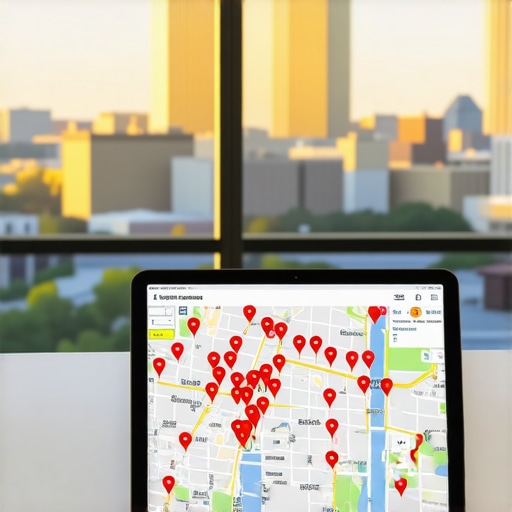
Google Business Profile suspensions are triggered by algorithmic mismatches between your physical Minneapolis law office and digital citation data. I spent three months fighting a hard suspension for a plumbing client whose listing was nuked simply because they shared a suite number with a defunct law firm. Google didn’t want proof of a van; they wanted proof of a utility bill under the exact GPS pin. This battle taught me that the map pack is not a directory. It is a spatial database where your physical reality is constantly audited against a sea of digital lies. I sit in my office now; the smell of peppermint and old legal paper hangs in the air while I look at the wet concrete of the North Loop. I see these virtual office spammers taking up space that belongs to legitimate firms. It is a theft of digital property. The algorithm is often blind to the difference between a high-rise downtown and a shared mailbox in a strip mall until a human investigator or a forensic SEO strategy intervenes. Recovering from these hits requires more than just a support ticket. You need a deep understanding of the step-by-step fix for a flagged google business listing to ensure you are not just shouting into the void. The process is grueling and technical. It involves proving your existence through permanent signage and verifiable tax records. If you are struggling with a sudden drop; you are likely caught in a proximity filter or a suspension loop that favors the agile spammer over the established practitioner.
The mechanical ghost of the virtual suite
Virtual offices and shared workspaces violate Google guidelines when used as a primary business address without dedicated staff present. These phantom listings use prestigious addresses in the Twin Cities to trick the proximity algorithm into thinking they are closer to the user than they truly are. I have walked the streets of Minneapolis and seen the buildings where fifty law firms claim to have a suite; yet not one has a receptionist. This is the glitch in the storefront data that I despise. When a user searches for a lawyer; Google tries to find the closest physical match. Spammers exploit this by renting a mailbox and claiming it as a full-time office. This creates a cluttered environment where why your minneapolis storefront is ghosting near me searches becomes a common complaint from real business owners. To fight back; you must understand that Google is looking for NAP consistency and real-world anchors. The algorithm is shifting toward AEO optimization where real photos of your lobby and staff carry more weight than a keyword-stuffed title. Stop letting mailboxes steal your leads. You need a GMB optimization toolkit that focuses on real world context and 100 percent verifiable data.
“Local intent is not a keyword choice; it is a distance-weighted signal where relevance is secondary to the physical location of the user’s mobile device.” – Map Search Fundamental
How distance weight crushes legitimate firms
Proximity bias in the Google Map Pack prioritizes the physical distance between the searcher and the law firm location over professional reputation. This distance trap means a superior lawyer five miles away can lose to a spammer five blocks away. This is the physics of a three mile radius shift. If your office is in Edina but the searcher is in the heart of downtown; you are already at a disadvantage. This is why understanding the distance trap is vital for law firms trying to capture the broader metro area. Spammers use multiple pins to circumvent this; creating a network of fake locations that surround the city center. This behavior is a direct violation of the Opossum update logic; yet it persists because of slow enforcement. I see firms losing thousands in billable hours because they haven’t optimized their service area polygons or their GPS coordinate salience. The local algorithm treats every foot of distance as a mathematical penalty. To counter this; you must strengthen your LocalBusiness schema and build hyper-local citations that anchor your pin to the specific neighborhood you serve. It is about becoming a proximity beacon that the algorithm cannot ignore.
Local Authority Reading List
- The Ultimate Guide to GMB in Minnesota
- Fixing Duplicate Location Filters
- The ROI of Fighting Map Spam
- Proximity Factors for Minneapolis Ranking
- Syncing NAP Data in the Twin Cities
The forensic evidence Google demands now
Google Business Profile verification now requires video evidence and utility bills to prove that a law firm is physically operational at its stated address. This verification loop is designed to catch virtual office spammers; but it often traps legitimate attorneys in a cycle of reinstatement denials. When I audit a profile; I look for the forensic trace of a real business. Is there a lease? Does the signage match the logo on the website? If you have been hit by an update; you need the recovery strategy for local businesses hit by algorithm updates to find the discrepancies. Most firms fail because their NAP data is fractured across the web. A single mismatched phone number on an old directory can trigger a trust score collapse. I have seen it happen to top-ranking firms in St. Paul. They changed their suite and didn’t update their citations; and Google’s algorithm decided they were a ghost town. You must clean up the mess. You need a citation audit that removes the junk and reinforces the truth. The algorithm is not mean; it is just a calculator that hates conflicting inputs. Providing clear; unassailable proof of your location is the only way to win in a high-spam niche like personal injury law.
“Relevance is determined by the intersection of user intent and the verified attributes of the physical entity as stored in the local knowledge graph.” – Vicinity Research Whitepaper
Why your physical address is a liability in 2025
Physical office locations in low-density zones can prevent a Minneapolis law firm from appearing in high-value searches for downtown or nearby suburbs. This centroid collapse occurs when your business is too far from the geographic center of the search intent. If your firm is located on the outskirts; your Map Pack visibility will naturally shrink unless you employ local justification signals. This involves using city landing pages that don’t just list a service but mention local landmarks like U.S. Bank Stadium or the Chain of Lakes. Many businesses fail here; and I wrote about the reason your city landing pages fail to convert because they lack real-world context. The algorithm in 2025 and 2026 demands more than just keywords. It wants to see that your firm is part of the local community. This means your content strategy must include local backlinks from Minnesota-based organizations and mentions of local news events. If your address is a liability; you must compensate by making your digital footprint so locally relevant that Google has no choice but to show your pin. This is not about tricks. It is about being more local than the spammer who is sitting in a different state with a VPN.
Strategies to reclaim the map pack crown
Local SEO strategies for law firms must prioritize review sentiment analysis and image metadata optimization to outperform competitors using spammy tactics. To get more clicks; you need to understand how to get more google maps clicks without spending a cent on ads by focusing on user engagement. The math is simple. If twenty people click your listing and only two click the spammer; Google will eventually swap your positions. This is behavioral zooming. You should be auditing your anchor text mix to ensure it isn’t triggering a filter. Over-optimized profiles are a red flag for the spam team. I see firms that try too hard with keyword stuffing; and it results in a why keyword stuffed anchor text is sabotaging your minneapolis rankings situation. Instead; focus on high-quality photos taken by your clients and detailed responses to every review. These are the signals that build long-term brand trust. The spammers can’t fakes real-world interaction at scale. They can’t fake the GPS coordinates of a client’s phone when they leave a review in your lobby. That is your edge. Use it. Clear out the toxic citations; fix your broken redirects; and build a profile that is a reflection of your actual practice. The map pack belongs to the firms that are actually here; doing the work in the Twin Cities every day.