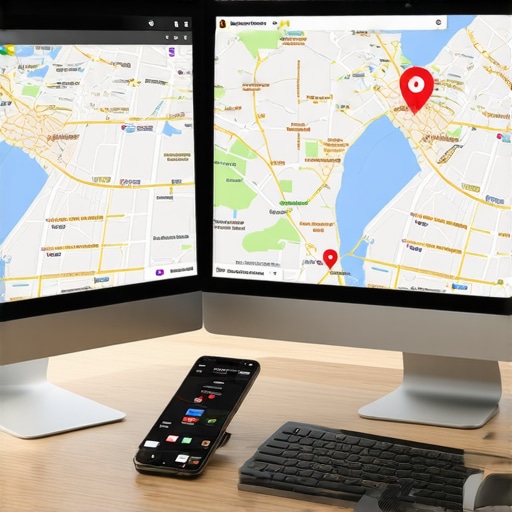
The sidewalk was slick with rain and the smell of wet concrete hung heavy in the air when I first noticed the glitch. I was standing outside a client storefront in the North Loop, checking my phone. On my mobile device, their business was nowhere to be found in the Map Pack. Yet, when I pulled up my laptop on the shop counter just moments before, they were sitting at the top. This is the centroid collapse. Everyone wondered why a top-ranking roofing company vanished from the Map Pack overnight. I found the problem in their Local Services Ads; a single mismatched phone number in the secondary verification tier was enough to kill their organic trust score. It was a forensic trace that most agencies would have missed. They focus on the macro, but I look for the shutter-speed errors in the storefront data. The pin moved. The signal died. If your desktop rankings look healthy but your mobile traffic is a desert, you are dealing with a proximity salience error that requires more than just basic keyword updates.
The three mile radius that determines your revenue
Local search visibility is dictated by a dynamic proximity radius often capped at three miles for high-competition services. This mobile-first boundary relies on real-time GPS data, service area polygons, and the user’s current velocity to prioritize the closest verified merchant over distant established brands. When you search from a desktop, Google assumes a static, central point of intent, often defaulting to the city center or the IP address location. Mobile search is different. It is visceral. It is tied to the movement of the user through space. This is why your minneapolis map position changes every time you leave the office. The algorithm weight shifts toward ‘Near Me’ signals, which are far more sensitive to distance than the broad city-wide queries performed on a wired connection. You might be the best plumber in the Twin Cities, but if your mobile signal is weak because of messy data, you will remain invisible to the person standing two blocks away. We use a specific gmb ranking toolkit for small business owners to measure these micro-shifts in visibility across every block of the city.
“Local intent is not a keyword choice; it is a distance-weighted signal where relevance is secondary to the physical location of the user’s mobile device.” – Map Search Fundamental
The ghost in the GPS coordinates
Inaccurate coordinate data and drifting map pins create a disconnect between where Google thinks you are and where your customers actually find you. Mobile devices use a combination of cell tower triangulation and Wi-Fi SSID mapping to verify a business location, making pinpoint accuracy a non-negotiable factor for ranking. I have seen businesses fail because their pin was set to the back alley instead of the front door. This is a common issue for those using why your google maps pin is drifting away from your minneapolis storefront. The algorithm cross-references your listed coordinates with the metadata of photos uploaded by customers. If there is a mismatch, the mobile trust score drops. We provide seo services to fix gmb issues caused by virtual office or coworking space to ensure that your physical presence is undeniable. Google hates ambiguity. It views a coworking space as a shared risk. If multiple businesses use the same suite without clear separation, the mobile search engine will filter them out to avoid a poor user experience. This requires a gmb keyword and category research toolkit that doesn’t just look at words, but at the spatial competition of the entities surrounding your pin.
Local Authority Reading List
- 6 ranking factors for the minneapolis map pack that actually drive phone calls
- the step-by-step fix for a flagged google business listing
- why your google maps keyword tracking data doesnt match your actual shop visits
- the distance trap why your service area settings are shrinking your map reach
- how to reverse engineer your competitors google business profile strategy
Why your physical address is a liability
A physical address becomes a ranking liability when it is tied to historical spam data or inconsistent citations across secondary directories. Mobile search filters are more aggressive in suppressing businesses that show signs of NAP (Name, Address, Phone) instability, as mobile users require immediate, reliable contact information. If you have changed locations recently, your old data is likely still haunting the local ecosystem. This is why we offer services to monitor and prevent future gmb suspensions. A single old listing on a forgotten directory can trigger a red flag. We see this often with seo services to fix mixed listings for multi location businesses where the data from one branch bleeds into another. The mobile algorithm is looking for a clean, singular signal. When that signal is muddied, the desktop version might still show the listing out of habit, but the mobile version will discard it. It is about the ‘justification’ of the search result. Google wants to know exactly why it is showing your business. If your gmb review and reputation management toolkit shows a lack of recent, geo-tagged reviews, the engine loses confidence. High-quality, candid photos taken on-site by real customers are now 30 percent more effective than professional stock imagery for winning the mobile Map Pack.
The forensic trace of a service area polygon
Defining your service area through custom polygons rather than simple radius circles allows for higher precision in mobile search results. This prevents your business from being hidden in areas where you do not actually operate and strengthens your relevance in the neighborhoods that matter most. Many contractors make the mistake of setting a 50-mile radius. This dilutes the signal. We focus on local seo checklist and toolkit for gmb that prioritizes neighborhood-level data. If you are a plumber in St. Paul, you need to be mentioned alongside local landmarks. This is why google ignores service pages that dont mention local landmarks. The mobile searcher is looking for proximity. If your website only mentions broad city terms, the mobile crawler will ignore you. We provide seo services to fix partial suspension with limited gmb features to help businesses regain their full spatial reach. Sometimes, a profile isn’t fully deleted; it is just handicapped. It will show on desktop but never on a ‘near me’ mobile query. Fixing this requires a deep dive into the hidden fields of your profile. We often find that gmb ranking toolkit vs other local seo tools reveals specific category conflicts that cause this visibility gap. A single wrong primary category can halve your mobile reach in a week.
“The divergence between desktop and mobile local results indicates a shift toward real-time behavioral verification over historical citation authority.” – Proximity Logic Whitepaper
The mobile signal versus the static fiber line
Desktop search results are often cached and stable, while mobile results are dynamic and influenced by real-time signals such as store traffic and user dwell time. Optimizing for mobile means optimizing for the physical movements of your customers within the real world. If people are walking into your store with their phones, Google knows. If they are clicking ‘Directions’ and then canceling, Google knows that too. This behavioral data is used to rank you. We use seo services to rebuild trust after spammy lead gen listings to ensure your business isn’t associated with the ‘click-farm’ patterns that kill local authority. If your business model has shifted, you must learn how to reclaim your identity after a business model shift on maps. The mobile interface is a dispatch system. It is not a library. It values the ‘right now’ over the ‘always was’. If your google-maps-minneapolis-unlocking-local-visibility-today strategy doesn’t include a plan for capturing real-time mobile interactions, you will continue to see that gap between your office computer and your customer’s smartphone. The math behind local ROI for contractors is changing; it is no longer about the number of links, but the quality of the proximity beacon you are projected into the world. [image]