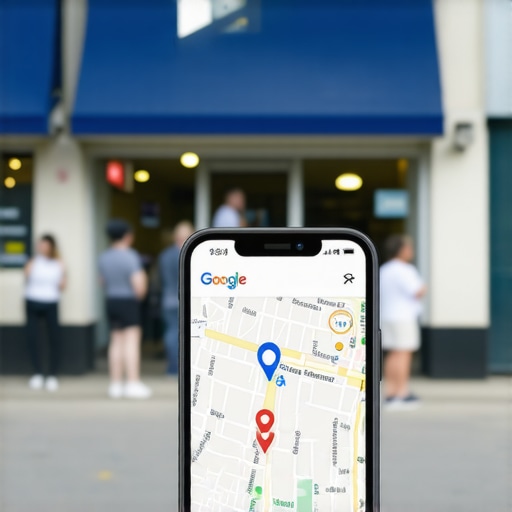
How to Get More Google Maps Clicks Without Spending a Cent on Ads
In the high-stakes world of local search, the cost of visibility is skyrocketing. As we navigate 2026, the cost-per-click (CPC) for Google Maps Ads has reached a point where many small to medium-sized businesses are being priced out of their own neighborhoods. However, there is a massive opportunity hidden in plain sight. While your competitors are draining their budgets on “Sponsored” pins, the most savvy businesses are dominating the Map Pack through organic google business profile seo.
The data doesn’t lie: recent BrightLocal studies confirm that 83% of American consumers check Google before visiting a local business in person. But here is the kicker – as users become more tech-savvy, they are increasingly skipping the paid advertisements at the top of the results. They are looking for the “real” winners: the businesses that have earned their spot through relevance, reputation, and engagement.
The problem is that many businesses have high-quality services and great reviews but remain “buried” under competitors. This usually happens because they treat their profile as a static digital yellow-pages listing rather than a living, breathing marketing asset. In 2026, the game has changed to “Engagement-Driven SEO.” It is no longer enough to just exist; you must interact. As a Google Business Profile (GBP) Product Expert, I have seen firsthand how minor technical adjustments and a commitment to fresh content can catapult a business from page three to the top of the Map Pack. This guide will show you exactly how to do it without spending a single cent on ads.
Section 1: Why Organic Maps Ranking Beats Ads in 2026
For years, the industry mantra was “pay to play.” If you wanted to be seen in a competitive market like Minneapolis, you bought your way into the top spot. But in 2026, we are seeing a significant shift from “quantity of leads” to “conversion quality.” Users have developed “ad blindness” specifically within the Google Maps interface. They recognize that a “Sponsored” pin only means the business has a budget, not necessarily that they have the best service.
Organic listings carry an inherent “trust tax” that ads simply cannot buy. When a user sees your business in the top three results without a “Sponsored” tag, Google is essentially giving you a third-party endorsement. This leads to a significantly higher Click-Through Rate (CTR). In fact, CTR is now a core ranking signal in the local algorithm. Google’s AI monitors how many people click your listing, how long they stay on your profile, and whether they take an action like calling or requesting directions. This creates a virtuous cycle: the more organic clicks you get, the higher you rank, which leads to even more clicks.
Before you consider dumping more money into a Performance Max campaign, you need to understand The Hidden Costs of Cheap Local Search Packages in Minnesota. Often, these packages focus on short-term ad wins rather than building the long-term organic authority that keeps you at the top of the map for years. To truly compete, you need the right google maps seo tools to analyze where you actually stand compared to the competition.
Section 2: The Foundation – Advanced Google Business Profile Optimization
Most business owners think they’ve optimized their profile because they filled out their Name, Address, and Phone number (NAP). In 2026, that is just the entry fee. To rank higher on google maps, you need to dig into the granular details that Google’s local algorithm uses to determine relevance.
Strategic Category Selection
Your primary category is the single most important piece of metadata on your profile. Choosing the wrong one can completely invisible-ize you for your most profitable keywords. For example, a “Personal Injury Attorney” who mistakenly sets their primary category to “Legal Services” will struggle to outrank specialists. You must analyze the top three ranking competitors in your niche and see which primary category they are using. Often, Choosing the Wrong Google Business Category is Killing Your Minneapolis Reach because it dilutes your relevance for high-intent local searches.
The Power of Service Menus
Google now uses the “Services” section to pull “justifications” – those small snippets of text that say “Provides [Service Name]” in the search results. Don’t just list your services; write keyword-rich descriptions for every single one. If you are a plumber, don’t just list “Drain Cleaning.” Write a description that mentions “emergency drain cleaning in Minneapolis,” “clogged toilet repair,” and “hydro-jetting services.” This helps Google understand the full breadth of your expertise.
The “Map Check-In” Strategy
One of the most effective ways to prove geographic relevance is what I call the “Map Check-In” strategy. Google tracks the GPS metadata of the photos you upload. If you are a contractor working in a specific suburb, take a photo of the job site (with the customer’s permission) and upload it to your profile immediately. This creates a “geographic footprint” that tells Google you aren’t just a business with a physical office; you are actively serving the entire community. This is a foundational element of google business profile optimization that most agencies overlook.
To manage these technical details at scale, many professionals utilize local seo software to ensure no optimization opportunity is missed.
Section 4: The 2026 Review Engine – Freshness Over Volume
There is a common misconception that the business with the most reviews wins. While volume matters, in 2026, Google has shifted its weight toward “Review Freshness.” A business with 500 reviews from three years ago will often be outranked by a business with 50 reviews, 10 of which were left in the last month. Google wants to see that you are currently providing excellent service.
Furthermore, the content of the reviews is more important than ever. You’ve likely seen the “Justifications” in the Map Pack – bolded text that says “…best pizza in Minneapolis…” or “…helped me with my water heater…” These are pulled directly from customer reviews. While you cannot tell a customer what to write, you can ask them to mention the specific service they received. This naturally embeds high-value keywords into your profile in a way that Google trusts implicitly. To stay ahead of this, you need to rank google business profile assets by implementing an automated review request system that captures feedback immediately after a transaction.
Responding to reviews is also non-negotiable. In 2026, the speed and quality of owner responses are tracked. A thoughtful response that addresses the customer by name and mentions the service performed not only builds trust with prospective customers but also signals to Google that the business is active and managed by a real human. This is one of the most effective ways to get more calls from google maps without paying for a single ad impression.
Section 5: Technical Signals – Schema, Backlinks, and Proximity
While the Google Business Profile is the “front end” of your local SEO, the “back end” happens on your website. Google looks for a “digital consensus” to verify that the information on your profile is accurate. This is where technical google business profile seo becomes critical.
Local Business Schema
Schema markup (JSON-LD) is a translator that tells Google exactly what your business is, where it is located, and what services it offers. By implementing Local Business Schema on your website, you create a direct link between your site and your Map listing. This helps Google connect the dots, especially if you have multiple locations. If you aren’t sure where to start, check out these 5 Schema Fixes That Help Small Minnesota Shops Outrank National Brands.
Hyperlocal Backlinks
In the past, any backlink was a good backlink. In 2026, proximity is king. A link from a local Minneapolis neighborhood blog, a youth sports sponsorship page, or a local chamber of commerce is worth ten times more than a link from a national news site. These “hyperlocal” links anchor your business to a specific geographic coordinate in Google’s knowledge graph. This is a core component of any professional google maps ranking service.
NAP Consistency and Citation Cleanup
If your business address is listed as “123 Main St” on your website but “123 Main Street” on Yelp and “123 Main” on Facebook, Google’s confidence in your location drops. While the algorithm has become better at understanding variations, “messy” citations still sabotage trust. Using google maps seo tools to audit and fix these inconsistencies is the fastest way to stabilize your rankings and stop “ranking drift.”
Section 6: Measuring What Matters – Clicks vs. Calls
The biggest mistake business owners make is looking at “Profile Views” as their primary metric. Views are a vanity metric. You can get thousands of views from people who are just scrolling past you. To dominate your market, you must track “High-Intent Actions”: Direction Requests, Website Clicks, and Phone Calls.
If you are seeing high views but low engagement, you likely have a “Trust Signal” issue. This usually means your photos are poor, your reviews are outdated, or your Q&A section is empty. Understanding Why Your Minneapolis Business Profile Gets Views But No Phone Calls is the first step toward fixing your conversion funnel. You should also be using a google maps rank tracker to see how your “pin” moves across the city. A business might rank #1 for someone standing in their lobby but drop to #10 just three blocks away. Your goal is to expand your “ranking bubble” until you cover your entire target service area.
Conclusion & Next Steps
Organic dominance on Google Maps in 2026 isn’t a “set it and forget it” task. It requires a commitment to engagement, fresh content, and technical precision. By focusing on high-quality visuals, fresh reviews, and hyperlocal technical signals, you can build a competitive moat around your business that no ad budget can bridge. You don’t need to pay Google for the privilege of being found by your neighbors; you just need to prove to Google that you are the most relevant, trusted, and active choice in the market.
Ready to stop wasting money on ads and start winning organically? Contact Us today for a custom strategy audit and let’s get your business to the top of the map.