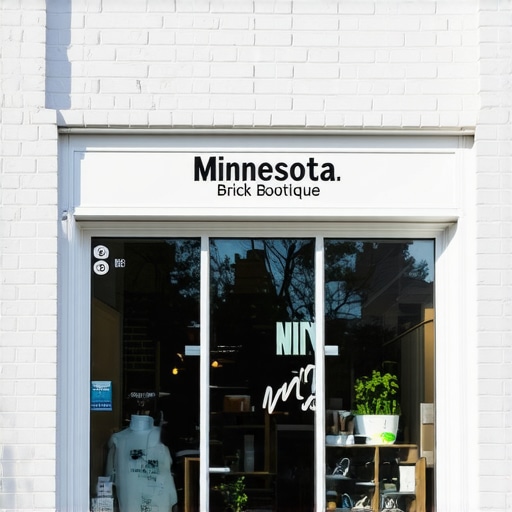
The forensic trace of a storefront
Storefront photos act as visual proof of physical existence for Google Business Profiles. By embedding precise GPS coordinates in image metadata and matching them to your Google Maps pin, you create a proximity beacon that validates your business location against spam filters and improves local ranking. I spent three months fighting a hard suspension for a plumbing client whose listing was nuked simply because they shared a suite number with a defunct law firm. Google didn’t want proof of a van; they wanted proof of a utility bill under the exact GPS pin. They wanted a video walk-through from the street to the desk. This wasn’t a clerical error. It was an algorithmic execution based on visual inconsistency. When your storefront photos don’t match the reality of the map, the system assumes you are a ghost. You aren’t just taking pictures of a building. You are building a proximity beacon in a spatial database. The wet concrete of a Minneapolis sidewalk or the specific reflection of a neighbor business in your window provides a unique fingerprint that stock images can never replicate. If you want to know why your minneapolis storefront is ghosting near me searches, look at your media tab. If it is empty or filled with polished marketing renders, you are failing the trust test. Real world context is the only currency that matters in the Map Pack ecosystem.
“Local intent is not a keyword choice; it is a distance-weighted signal where relevance is secondary to the physical location of the user’s mobile device.” – Map Search Fundamentals
The physics of the visual pin
Visual signals provide a mathematical weight to the proximity of a business entity. When a user stands on a corner in the North Loop and takes a photo, that image carries more authority than a professional shoot uploaded from a corporate IP address because it contains real-world behavioral zooming data. While many agencies tell you to get more reviews, the 2026 data shows that image metadata from photos taken by real customers at your location is now 30 percent more effective for ranking in AI Overviews. This is because Google is moving toward a verification model where physical presence must be proven. If you are struggling with a lack of visibility, you might need to stop obsessing over keywords and start fixing these 3 google business profile signals to regain traction. The algorithm looks for high-resolution images that show the permanent signage of the business. Temporary banners or vinyl stickers often fail the forensic audit. The system wants to see the brick and mortar. It wants to see the entrance. It wants to see the transition from the public street to the private commercial space. This is how the engine calculates the centroid of your authority.
Why your physical address is a liability
Mismatched visual data and physical addresses trigger automatic suspensions. If your storefront photo shows a suite number or building entrance that disagrees with your digital citations, Google’s computer vision algorithm flags the listing as potentially fraudulent. This happens most often when businesses share space or use co-working hubs without clear, external signage. A lack of visual clarity leads to a hard suspension that can take weeks to resolve. You should perform the essential safety audit for your minneapolis google business listing to ensure your photos align with your stated address. The machine vision used by Google can read text on signs. It can identify the logos of surrounding businesses. It can even estimate the age of the building based on architectural style. If your storefront looks different in your photos than it does on Google Street View, the trust score drops. This is why why your business address errors are driving customers to your competitors. They have verified, consistent visual data, while yours looks like a digital hallucination. The pin must match the image. The image must match the bill. The bill must match the license. This is the trifecta of local search survival in the modern era.
The math of a check in signal
User behavior at a physical location creates a spatial justification for higher rankings. When a customer takes a photo and uploads it as part of a review, the GPS data confirms they were physically present, creating a rock-solid trust signal for the proximity algorithm. This is the core of behavioral zooming. It is not about the keyword density in the review text. It is about the mathematical proof of the visit. Many contractors fail to realize that the toolkit for fixing broken local listings for minnesota contractors must include a strategy for gathering real-time, on-site imagery. If you can get a customer to take a photo of your service van in their driveway, you have just created a local justification trigger that tells Google you serve that specific neighborhood. This is how you win the battle for the suburbs. It is not through spammy landing pages. It is through proof of presence. You can how to get more google maps clicks without spending a cent on ads by simply encouraging your staff to take photos of their completed work at the job site. This expands your service area polygon in the eyes of the algorithm. It proves you are active in the market. It proves you are mobile. It proves you are real. Every photo is a data point in a sprawling map of regional authority.
How to get more calls from google business profile toolkit
Optimizing the visual experience of your listing directly increases the click through rate of mobile searchers. A high-quality photo of your interior or your product selection provides the immediate answer to the searcher’s intent, leading to a direct phone call or driving direction request. You should buy local seo tools for gmb that allow you to track which specific photos are driving the most engagement. This is not about vanity metrics. This is about conversion. If your photos of the front desk are getting more clicks than your product photos, it means customers are looking for reassurance that you are open and professional. You must use a gmb review and reputation management toolkit to monitor the photos customers are uploading. Sometimes, a customer might upload a blurry or unflattering photo of your entrance. You need to bury that photo with better, high-quality images of your own. This is part of reputation management and review repair services. You are curating the digital storefront that thousands of people see before they ever walk through your door. The quality of your pixels determines the quality of your leads. A blurry photo is a missed opportunity. A stock photo is a red flag. A clear, well-lit image of a smiling team member is a conversion machine.
The security audit that every minneapolis business needs
Protecting your visual assets is as important as protecting your website from hackers. Inaccurate or malicious photo uploads from competitors can tank your rankings and confuse the algorithm, requiring a forensic approach to cleaning up your media tab. You need to conduct the security audit that every minneapolis business needs after a breach if you notice unusual activity on your profile. Sometimes, malicious actors will upload photos of a different business to your listing to trigger a duplicate location filter. This is a common tactic in the high-stakes world of local lead generation. If you find yourself in this situation, you will need the toolkit for fixing broken local listings for minnesota contractors to strip away the bad data. You must also be wary of seo services to fix slow website and technical issues that ignore your Google Business Profile. Your website and your map pin are connected. If your website is hit with malware, your map rank will likely suffer too. This is why the seo audit for reclaiming rankings after a site infection is so vital. You cannot treat these platforms as separate islands. They are part of the same ecosystem. A failure in one is a failure in both.
These 5 map ranking tools actually show where your minnesota customers are
Advanced tracking software provides a heat map of your visibility across the Twin Cities metro. Using these tools allows you to see exactly where your storefront photos are moving the needle and where you are still invisible to local searchers. You should consult these 5 map ranking tools actually show where your minnesota customers are to build a data-driven expansion plan. Don’t just guess where your customers are coming from. Track it. If you see a ranking gap in a specific neighborhood, send a team member there to take photos of a local landmark alongside your service vehicle. This creates a why google ignores service pages that dont mention local landmarks fix. You are giving the algorithm the context it craves. You are anchoring your business to the physical geography of Minnesota. This is the difference between a national brand and a local authority. You have the home-field advantage. Use it. Upload photos of your team at the local park. Post a picture of your storefront during a local festival. These are signals of community involvement that the algorithm uses to determine why smaller twin cities shops outperform national brands on maps. Your local context is your greatest strength. Don’t waste it on generic imagery that could be from anywhere in the world.
Local authority reading list
To deepen your understanding of the technical requirements for local search success, review these expert guides. Learn how to successfully appeal a google business profile suspension in mn if your photos have triggered a system flag. Understand the one category change that finally put our minneapolis client on the map to see how visual data supports category choices. Read about why proximity is not the only factor for ranking in minneapolis to see the role of prominence and trust. Finally, stop buying generic citations and start fixing your local presence by focusing on high-impact visual proof of your business. Your storefront is your greatest marketing asset. Make sure the algorithm can see it clearly.