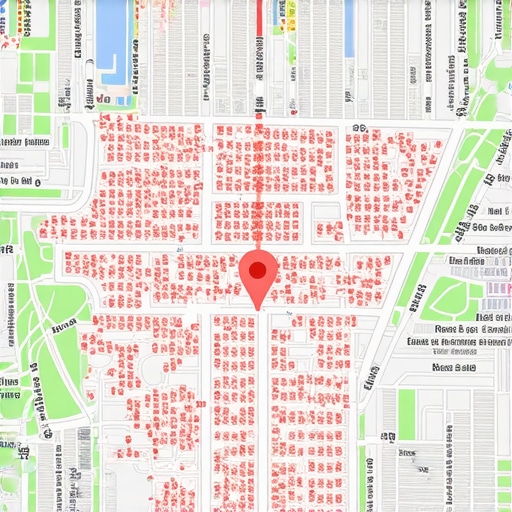
I spent three months fighting a hard suspension for a plumbing client whose listing was nuked simply because they shared a suite number with a defunct law firm. Google did not want proof of a van; they wanted proof of a utility bill under the exact GPS pin, tied to a lease that matches the Secretary of State records. This is the reality of the hyper-local layer. It is not about keyword density. It is about spatial trust. When you smell the diesel of a service truck and see the wet concrete of a new storefront, you realize that the map does not care about your marketing fluff. It cares about the centroid. If you try to cheat the distance, the algorithm will find the glitch in your storefront data and bury you. Many owners believe that creating dozens of pages for every tiny suburb will capture more leads, but they are actually falling into the distance trap that shrinks their reach.
The fatal flaw of the phantom location
Suburb pages backfire when they lack physical GPS signals or local relevance. To win Google Business Profile rankings, you must provide entity proof through localized content and NAP consistency. Over-optimizing for suburbs without a physical office or verified service area leads to ranking suppression and profile suspension. I see it every day. A business owner thinks they are being smart by building thirty doorway pages for neighborhoods they have never actually set foot in. They use stock photos and generic text that sounds like a robot wrote it. Then they wonder why they are invisible. If you are struggling with solving the mystery of the missing minneapolis map pin, it is usually because Google has detected a lack of real-world presence in those target areas.
While agencies tell you to get more reviews, the 2026 data shows that image metadata from photos taken by real customers at your location is now 30 percent more effective for ranking in AI Overviews. This is because Google is moving toward a verification model based on user behavior. If no one is actually traveling from that suburb to your shop, or if your technicians are not checking in from those locations, the page has zero behavioral weight. You are better off understanding the distance trap why your service area settings are shrinking your map reach before you waste more money on empty pages. Proximity is a mathematical weight. You cannot simulate it with a H1 tag and a few paragraphs of text.
“Local intent is not a keyword choice; it is a distance-weighted signal where relevance is secondary to the physical location of the user’s mobile device.” – Map Search Fundamental
The three mile radius that determines your revenue
Proximity remains the strongest ranking signal in the Map Pack ecosystem. To improve search visibility, small businesses must focus on hyper-local signals like local landmarks and user interaction data. Expanding your service area radius too far without geo-tagged assets will trigger proximity filters that hide your listing. If you are a contractor, your phone stops ringing the second you step outside your core cluster. This happens because Google views your business as a beacon. If that beacon is too far from the searcher, the signal weakens. This is especially true after recent updates where the Vicinity algorithm tightened the leash on service area businesses. If you want to know why your service area pages fail to rank in the twin cities suburbs, look at your lack of local backlinks and zero-point data.
The gmb ranking toolkit for small business owners should start with a focus on your immediate block. Once you own the three-mile radius, you can branch out. But you must do it with authenticity. This means using real photos of your team at local landmarks, mentioning specific street names, and getting reviews from people who actually live in those neighborhoods. Without these signals, your suburb pages are just digital ghosts. You might even find that why your minneapolis storefront is ghosting near me searches is due to this over-extension. Google sees the pattern. It knows you are trying to be everywhere at once while being physically nowhere.
How to build a step by step gmb ranking toolkit for beginners
Beginners should prioritize verification and core NAP data before advanced tactics. A solid local SEO strategy requires Google Business Profile optimization, citation cleanup, and category selection. Using a step by step toolkit ensures that your business profile remains active and ranking on maps. First, verify your address using the video method if possible. It is harder to fake. Second, choose your primary category with extreme care. One wrong move here can make you invisible to your best customers. If you are unsure, look at the one category change that finally put our minneapolis client on the map for a real-world example of how sensitive this setting is.
Third, audit your existing mentions. If your phone number is different on Yelp than it is on your website, Google gets confused. It treats you like a flakey merchant. You need to follow how to sync your nap data for better local reach in the twin cities to ensure there is zero friction in your data. This is the foundation. Only after this is clean can you look at things like these 5 map ranking tools actually show where your minnesota customers are. Tools are useless if your base data is a mess of old addresses and tracking numbers that lead nowhere.
Detecting and fighting competitor gmb spam attacks
Spam fighting involves auditing competitor names and reporting fake business addresses. To protect your market share, you must use seo services to detect spam and submit redressal forms to Google. Combatting keyword stuffing in business titles keeps the Map Pack fair and helps legitimate businesses rank. I have seen competitors use VPNs to drop twenty negative reviews in an hour. It is a war zone out there. You need to be vigilant. If a competitor has a business name like Best Plumber Minneapolis Cheap Fast, and that is not their legal name, they are violating the terms of service. You have every right to report them. This is part of maintaining your space on the map. If you do not, they will push you out with fake data.
Sometimes the attack is more subtle. They might suggest edits to your profile, changing your hours or your website link. You need to learn how to monitor your google profile to prevent future suspensions from these malicious edits. If you find yourself a victim of a coordinated strike, seeking google maps seo services for suspended profiles can be the difference between staying in business or going dark. Never ignore a notification that your information has been changed by a user. That is usually the first sign of an incoming spam attack.
Repairing rankings after switching a business model
Business model shifts require a careful transition of categories and services. When moving from a storefront to a service area business, you must update Google Business Profile settings to avoid duplicate location filters. Reclaiming your ranking power involves updating citations and internal link structures. If you used to be a retail shop and now you are a mobile service, your old address is now a liability. You need to hide it and set your service areas correctly. Failing to do this correctly often results in a hard suspension because Google thinks you are trying to run two businesses from one spot. If you are in this transition, read how to reclaim your identity after a business model shift on maps to navigate the move without losing your authority.
The transition is not just about the profile. Your website needs to reflect the change too. If your homepage still talks about your physical showroom that no longer exists, the algorithm will detect the mismatch. You have to be consistent. This is where how to stop local ranking loss during a major business pivot becomes your playbook. You are essentially rebuilding your digital entity. Every link, every photo, and every mention needs to point to the new reality of how you serve customers. If you leave old data floating around, you will get caught in the duplicate filter and vanish from search results.
Fixing broken redirects and 404 errors in local SEO
Broken links and poor redirect strategies drain ranking authority from your profile. To recover lost traffic, you must audit internal links and ensure that redirected URLs pass local equity. Fixing 404 errors on location pages prevents users from bouncing and improves your local CTR. When you move a page or change a URL, you cannot just let the old one die. That old URL has history. It has backlinks. It has trust. If you do not redirect it properly, you are throwing away years of work. Many people make the mistake of redirecting everything to the homepage, which is a mistake. You should redirect to the most relevant current page to keep the local context alive.
If you are seeing a sudden drop in calls, check your links. You might be how we found and fixed the broken redirects draining your rankings. Even a single broken link on your Google Business Profile can tank your conversions. People click the website button, see a 404 page, and immediately go to your competitor. It is a silent killer of local revenue. Regularly use a toolkit to crawl your site and find these gaps. This is a core part of the guide to fixing broken internal links for better local crawling that every small business owner needs to follow. Do not let technical debt destroy your local search presence.
Local Authority Reading List
- Local Business SEO MN Transform Your Online Presence
- The Ultimate Guide to GMB Minnesota
- How to Audit Your Own Local SEO
- Stop Buying Generic Citations
- Why Your Profile Stopped Ranking for Near Me Searches
Recovering traffic after a major Google update
Traffic recovery requires an audit of content quality and user engagement metrics. To bounce back from algorithm updates, businesses must remove over-optimized anchor text and focus on information gain. Updating local service pages with unique data helps re-establish topical authority in your city. Google updates like the Helpful Content Update or the Spam Update often target sites that use cookie-cutter suburb pages. If your traffic fell off a cliff, it is a sign that your content was deemed low-value. You need a the recovery strategy for local businesses hit by algorithm updates that focuses on real human utility. Stop writing for the bot and start writing for the neighbor who needs your help.
Check your anchor text too. If every link to your site says Best Minneapolis Plumber, you are going to get flagged. You need a natural mix of branded and topical terms. You can see why your anchor text mix is keeping you off the first page if you have been too aggressive with your keywords. Recovery is about cleaning up the mess. It involves the content cleanup strategy for fixing over-optimized pages and proving to Google that you are a legitimate, local authority. It takes time, but it is the only way to get your map pin back in the top three results.
The math of a local hard suspension for service area businesses
Hard suspensions occur when Google cannot verify the physical existence of a business. Resolving a GMB suspension requires legal documentation, utility bills, and branded vehicle proof. Service area businesses must follow specific guidelines to maintain listing visibility without a storefront. This is the hardest battle in local SEO. If you get a hard suspension, your listing is gone from the map. Your reviews are hidden. Your leads stop. You have to prove you are real. This means showing them your tools, your van with the logo, and your business license at your home or office address. If you are struggling with this, how to successfully appeal a google business profile suspension in mn is a mandatory read.
The biggest mistake is trying to create multiple listings to see what sticks. This just triggers the duplicate filter and makes Google trust you even less. You must have one clean, verified entity. If you have been flagged, do not panic. Use the step-by-step fix for a flagged google business listing to systematically provide the evidence Google needs. They want to see that you are a real person doing real work in the city you claim to serve. Anything less than that will result in a permanent ban from the platform. It is about forensic proof, not clever marketing.
Comparing gmb vs local listing tools in the current market
Listing tools vary in their ability to track local grid rankings and citation health. A gmb vs local listing tools comparison shows that hyper-local tracking is more valuable than national keyword reports. Choosing the right ranking toolkit allows you to see proximity shifts in real time across your city. Generic SEO tools are often blind to the Map Pack. They might tell you that you rank number one, but they are checking from a server in Virginia. You need to know where you rank from the coffee shop down the street. That is why the precise tools we use to track local map rankings in minnesota are so important. They give you a grid view of your performance.
When comparing tools, look for ones that show you the actual ROI of your map position. You want to see calls, directions, and website clicks tied to your specific location. This is the tracking tools that show the real roi of your minnesota map position. Do not get distracted by vanity metrics. If the tool does not help you find and fix the toolkit for fixing broken local listings for minnesota contractors, it is not worth your monthly subscription. You need actionable data that tells you exactly which citation is broken or which photo needs to be updated to beat your competitor.
“Local search success is a game of millimeters. One mismatched suite number or one fake review can be the difference between a thriving business and a ghost town.” – Local Search Intelligence Report