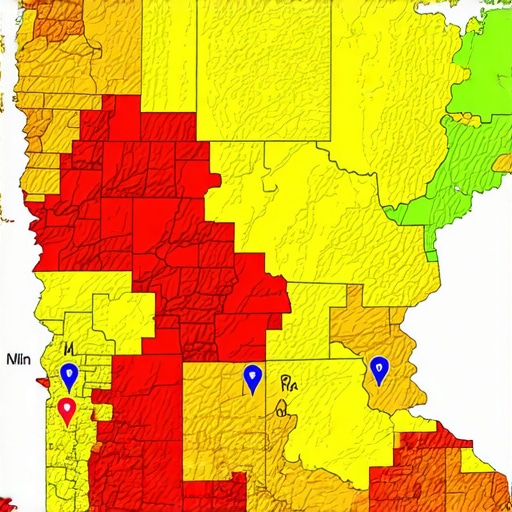
These 5 Map Ranking Tools Actually Show Where Your Minnesota Customers Are
If you own a business in the Twin Cities, you’ve probably experienced a common frustration. You sit at your desk in the North Loop, search for your services on Google, and see your business sitting proudly at the #1 spot in the Map Pack. You assume everything is fine. But then, a potential customer in Bloomington or Maple Grove performs that same search, and your business is nowhere to be found.
As someone who has spent over 25 years in the SEO and digital marketing trenches, I can tell you that this isn’t a glitch – it’s the reality of local search in 2025 and 2026. In the world of Google Maps Minneapolis, “Proximity” is the undisputed king. However, while proximity is the #1 ranking factor, relevance and authority are how you beat what I call the “Distance Trap.”
Local search intent is higher than it has ever been. Consumers aren’t just looking for a service; they are looking for a service near them right now. If you want to capture that traffic, you need to stop looking at static ranking reports and start looking at geogrid heat maps. You need to know exactly where your visibility ends so you can start pushing those boundaries outward. In this guide, I’m going to break down the five essential tools that show you exactly where your Minnesota customers are seeing you – and where they aren’t.
Why Standard SEO Reports Fail Minnesota Business Owners
For years, SEO agencies handed out PDF reports that showed a single number: “Average Rank.” If the report said you ranked #2 for “Plumber Minneapolis,” you felt good. But that number is a lie. Why? Because your Minneapolis map position changes every time you leave the office.
Google’s “Vicinity” update and the subsequent algorithmic shifts into 2026 have made the ranking radius smaller and more hyper-local. A business might rank #1 in the Linden Hills neighborhood but drop to #10 by the time a user crosses into Edina. Standard rank trackers that check from a single IP address or a broad zip code center cannot capture this nuance.
If you aren’t using a tool that visualizes your rankings on a grid, you are flying blind. You might be making marketing decisions based on data that only applies to the three blocks surrounding your storefront. To truly rank higher on Google Maps across the entire metro area, you need to see the “dead zones” where your competitors are eating your lunch.
1. SEO Viper Tools: The Precision Geogrid for Local Dominance
When it comes to high-level google business profile seo, I always point my clients toward **SEO Viper Tools**. If you are tired of guessing how far your reach extends, this is the premier solution.
What sets this apart as a top-tier google maps rank tracker is its geogrid visualization. Instead of giving you a list of keywords and numbers, it overlays a 13×13 or 15×15 grid across a map of your target area – whether that’s downtown Rochester or the suburbs of Minnetonka. Each point on the grid represents a specific physical location. The tool simulates a search from that exact spot and tells you where you rank.
By using this local ranking software, you can see a literal heat map of your business. Green circles mean you’re in the top 3; red circles mean you’re invisible. This allows you to identify specific neighborhoods where you are losing ground. For example, you might realize you dominate St. Paul but disappear the moment someone searches from Woodbury. This data is the foundation of any serious Google Business Profile optimization strategy because it tells you exactly where you need to build more local relevance.
2. BrightLocal: The Citation and Audit Powerhouse
While geogrids show you where you rank, you also need to know why you are ranking (or why you aren’t). This is where BrightLocal shines, particularly as a google business profile audit tool.
BrightLocal is a comprehensive suite that focuses heavily on local citations – the mentions of your Name, Address, and Phone number (NAP) across the web. For a Minnesota business, having your information consistent on local directories like the Greater Minneapolis Building Owners & Managers Association or the Minnesota Chamber of Commerce is vital.
The tool’s audit feature scans the web to find “messy” citations that might be confusing Google’s algorithm. If Google sees three different addresses for your business, it loses trust in your location, and your map pin will start to drift or disappear. Using BrightLocal to clean up these errors is a fundamental step in any google maps visibility boost campaign. It ensures that your foundational data is rock solid before you start trying to expand your ranking radius.
3. Local Falcon: Visualizing the Heat Map
Local Falcon was one of the pioneers of the “Scan” technology that transformed local SEO. It provides a “red-to-green” map that is incredibly intuitive for business owners to understand.
Imagine you are a roofing contractor based in St. Paul. You know you have customers in Roseville, Maplewood, and Mendota Heights. By running a Local Falcon scan, you can see a visual representation of your “dominance zone.” If the map shows a sea of green in St. Paul but turns deep red the second you cross the river into Minneapolis, you know you have a geographic relevance problem.
This tool is excellent for competitive analysis. You can run scans for your top competitors and see exactly where their “moat” is. This helps you understand if you are fighting an uphill battle against a business with 500 more reviews than you, or if you simply need to adjust your service area settings to stop the “Distance Trap” from shrinking your reach.
4. Whitespark: Finding the Local Gaps
Whitespark is widely considered the gold standard for citation finding. Their “Local Citation Finder” doesn’t just look for broad national directories; it helps you find the “Twin Cities Citations” that actually move your map pin.
In the world of local seo tools, Whitespark is the surgeon’s scalpel. It allows you to compare your citation profile against your competitors. If the top-ranking HVAC company in Duluth is listed on five local Duluth-specific business blogs that you’ve never heard of, Whitespark will find them.
Building these hyper-local links and citations tells Google that you aren’t just a business that happens to be in Minnesota – you are an active, authoritative part of the local community. This is often the “secret sauce” that helps a business rank higher even when they are physically further away from the searcher than their competitors.
5. Semrush Listing Management: Broad Visibility for Multi-Location Brands
If you are managing multiple locations across the state – perhaps clinics in St. Cloud, Mankato, and Bloomington – you need a way to maintain NAP consistency at scale. Semrush’s Listing Management tool is designed for this broad visibility.
It integrates with Yext to push your business information out to dozens of authoritative directories simultaneously. But more importantly, it tracks your “Map Rank” for specific keywords across all locations in one dashboard.
One of the biggest killers of local rankings is the “Ghost Town” effect. This happens when a business has outdated information on secondary sites like Yelp or Bing, leading Google to believe the business might be closed or relocated. Ensuring your listings are locked and synced is a key part of 6 ranking factors for the Minneapolis Map Pack that actually drive phone calls. If Google can’t trust your data, it won’t risk showing you to its users.
How to Use These Tools to Fix a “Ghosted” Google Maps Pin
So, you’ve used a tool like SEO Viper Tools and discovered that your pin is “ghosted” (not ranking) just two miles away from your office. What do you do next?
First, check your service area settings. Many Minnesota businesses accidentally limit their own reach by selecting service areas that are too broad or too narrow. I’ve seen cases where a St. Paul service area setting actually tanked a company’s Minneapolis search ranking because Google’s algorithm got confused about the primary service hub.
Second, look at your local content. If you want to rank in Bloomington, do you have any content on your website that mentions Bloomington? Do you have photos of jobs you’ve completed there? Google uses the content on your linked website to “verify” the geographic relevance of your Map listing.
Third, implement a review strategy that targets those red zones. If you have a customer in a neighborhood where your ranking is low, ask them to mention the neighborhood name in their Google review. This “geographic keyword” in a review can act as a powerful signal to Google that you are active and trusted in that specific area. For more detailed steps, check out our guide on 3 fixes for a ghosted Minneapolis Google Maps pin.
The Role of Expert Strategy in Map Ranking
Tools are incredibly powerful, but they are only as good as the person interpreting the data. A google maps ranking service isn’t just about clicking buttons; it’s about understanding the “why” behind the “where.”
At Minneapolis Local SEO, we use these geogrid tools to build custom strategies for our clients. We look at the data to determine if a client needs more citations, more local backlinks, better on-page SEO, or a more aggressive review acquisition strategy.
When you are looking for a partner to help you navigate this, be careful. There are a lot of “experts” who will promise you the world but deliver very little. Always ask 3 questions to ask a Minnesota SEO agency before signing a contract to ensure they actually understand the local landscape and own the professional-grade tools required to do the job right. If you want to avoid the headache, learn how to find an affordable local SEO service without getting scammed.
Conclusion: Stop Guessing and Start Mapping
In the competitive Minnesota market, visibility is the first step toward growth. You cannot fix what you cannot see. By moving away from standard rank reports and embracing geogrid technology, you gain the “unfair advantage” of knowing exactly where your market share ends.
Whether you choose to use SEO Viper Tools for its precision tracking or Whitespark for its citation deep-dives, the goal remains the same: total local dominance. Stop wondering why your Minneapolis Google Maps pin disappears the moment you leave downtown and start taking the technical steps to anchor it firmly across the entire Twin Cities metro.
Ready to see where your business actually stands? Contact Jesse Dolan at Minneapolis Local SEO for a professional audit, or head over to SEO Viper Tools to start tracking your own rankings today. Don’t let your competitors own the neighborhoods that should be yours.